Signature Experiences — Bush & Beach
Kenya & Tanzania: An Immersive Journey Through Bush, Beach, Culture & Discovery
A worthwhile and unforgettable Kenya & Tanzania safari should end at the Indian Ocean beaches.
A worthwhile and unforgettable Kenya & Tanzania safari should end at the Indian Ocean beaches.
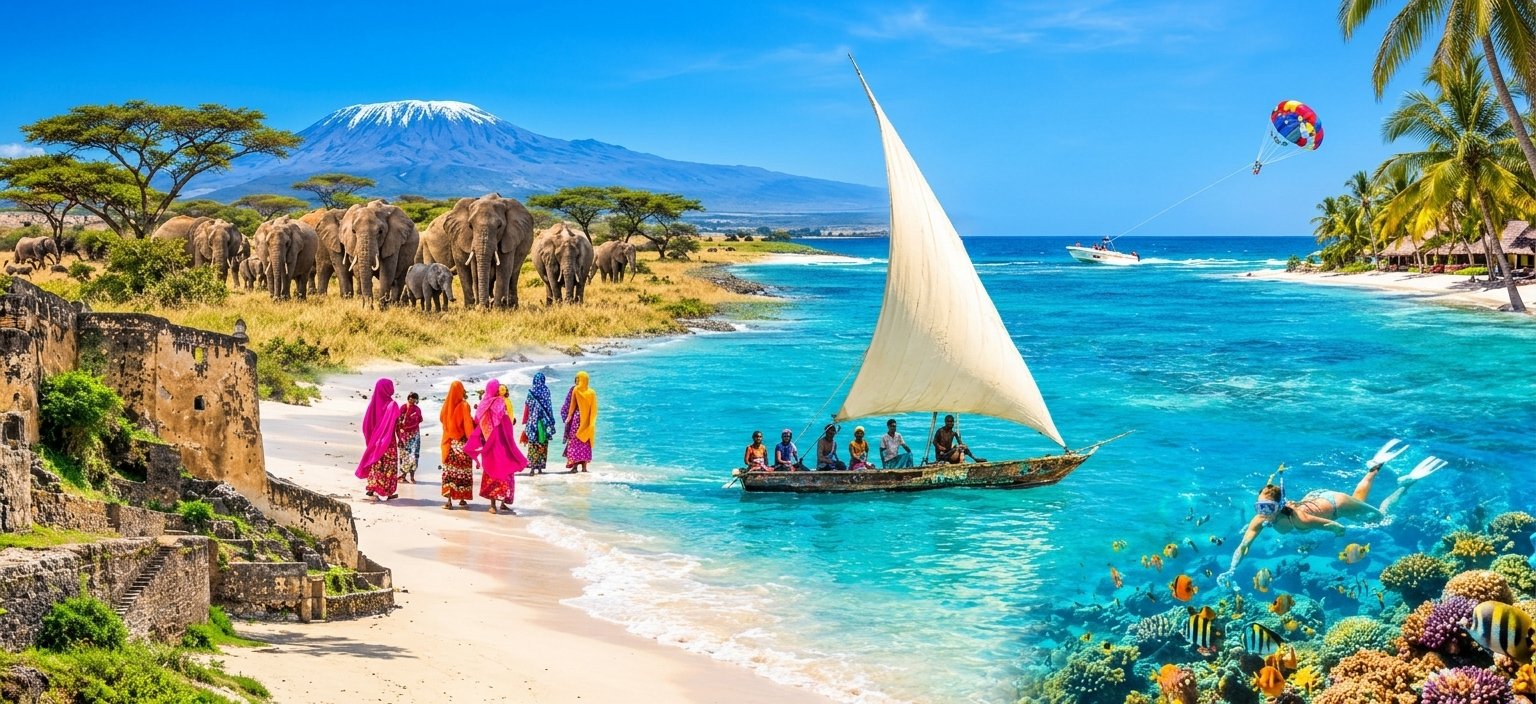
Travellers cross oceans to come to Kenya & Tanzania for a wildlife safari — but too many still plan as if the two countries end at the edge of the bush. After days that start before sunrise, throwing dust into your hair and scanning every patch of grass for a flicker of movement, safari somehow keeps you hungry for one more drive, one more sighting and one more story from the guide. An extension to the Indian Ocean beaches & islands gives travellers an opportunity to unwind from that intensity without leaving East Africa. These destinations offer a memorable finale to any East African wildlife safari.
North of Mombasa, Watamu offers a refreshing change of pace after a Kenya–Tanzania safari. Offshore reef excursions, nearby centuries-old Swahili heritage and the Indian Ocean setting travellers seek make it an ideal beach finale while keeping the journey rooted in Kenya.
Beach Accommodations. There are plenty of beach accommodations to suit any budget — low & mid-budget through to high-end & luxury.
More Than a Place to Recover. Kenya & Tanzania beach destinations offer a welcome change of pace after demanding days in the bush. Massages, leisurely lunches and time by the water provide a natural counterpoint to early wake-up calls, long game drives and the constant alertness of a safari. Yet the coast offers more than rest. Diving and snorkelling shift the focus from savannah wildlife to coral reefs, colourful fish and larger marine species. Even the packing changes, as dust scarves and safari layers give way to swimwear, reef-safe sunscreen and sunglasses.
Beyond any single site, the Kenya & Tanzania coast reveals a long and layered Swahili heritage stretching from Lamu (Kenya) to Kilwa (Tanzania). Lamu's narrow lanes, coral-stone houses and carved doors reflect centuries of African, Arab, Persian, Indian and European exchange. Farther south, historic settlements and ports around Malindi, Gede, Zanzibar, Bagamoyo and Kilwa trace the trade networks, faith and architecture that shaped coastal life — while Shimoni and Wasini preserve stories of seafaring communities and Indian Ocean connections. Together, these places present Swahili culture not as a distant relic, but as a living coastal tradition expressed through language, food, craftsmanship, religion and dhow travel.
At the end of your beach day, a dhow — a traditional wooden sailing boat — offers a completely different kind of evening than a safari drive. Instead of wrapping up beside a vehicle, you head out onto the Indian Ocean as the light fades, with the focus shifting fully to the water and coastline. Dinner on board often features fresh seafood with Swahili flavours, keeping the experience grounded in the place rather than the bush.
Conservation Along the Kenya Coast. Conservation can become part of a coastal holiday rather than simply a cause observed from a distance. At Kenya Wildlife Service marine protected areas — including Watamu, Malindi, Mombasa and Kisite–Mpunguti — park fees and guided snorkelling, diving and boat excursions support the protection of coral reefs, seagrass beds, mangroves and marine wildlife. Visitors can explore these habitats with licensed local operators while following park rules that reduce damage to fragile ecosystems.
The Indian Ocean Belongs in the Itinerary. For travellers willing to cross oceans for a Kenya & Tanzania wildlife safari, an extension to any of the Indian Ocean beaches makes the case for staying in the country long enough to reach the water. The coast gives the trip a slower ending while adding reef, history, food and local conservation to the wildlife experience most travellers came for. A Kenya & Tanzania wildlife safari does not have to end at the edge of the bush — and for travellers who reach the Indian Ocean, this adds another dimension to the whole safari experience.